Blog
The “We” in Times of Fragmentation
por Alfredo Carrasquillo
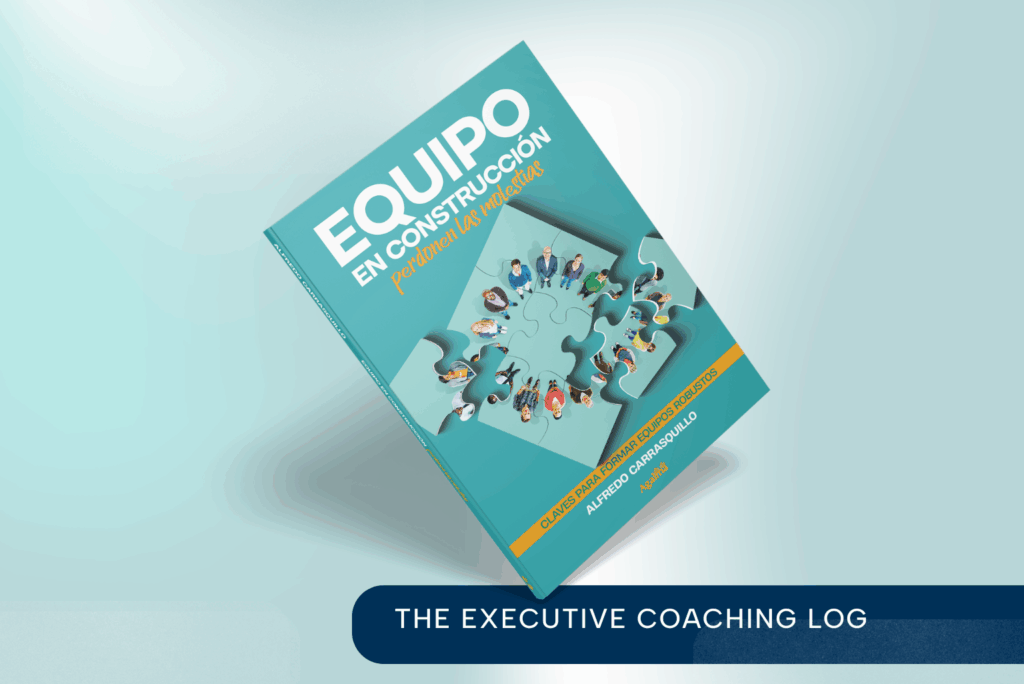
There is no company, community, or project that doesn’t dream of having a great team. The curious thing is that everyone wants it, but few truly understand what it takes to build one. In practice, shaping a strong “we”—the kind that sustains both results and healthy relationships—is a craft, slow-cooked amid paradoxes, discomforts, and shared learning.
The ideal of a harmonious team seduces us. We like to imagine a group where everyone understands each other, collaborates without tension, and rows in perfect sync. But reality tends to be more human: colliding egos, heavy silences, and uneven rhythms that generate friction. And yet, it is precisely in that imperfect terrain where true collective strength can emerge.
In my new book Equipo en construcción, perdonen las molestias, I reflect on that inevitable tension: the distance between what we aspire to be as a team and what we actually are. Because between the intention to collaborate and the real ability to do so, there are many invisible layers—emotional, institutional, and cultural—that challenge us. I call them “the inconveniences of building,” not as a complaint, but as a reminder that every construction process generates noise, dust, and discomfort. And there are no shortcuts if we truly want to go far.
Much of today’s dissatisfaction within teams has deep roots. We were raised to compete, not to collaborate. We were taught to stand out individually, not to listen without trying to win every conversation. And when organizations replicate these same logics—rewarding productivity over trust, results over relationships— fragmentation becomes culture.
Still, there is hope. I’ve seen teams brave enough to have the difficult conversations others avoid, willing to look each other in the eye to acknowledge what isn’t working and what could work better. That conversational courage is the seed of every strong team. The goal is not to eliminate conflict but to transform it into a source of creativity. It’s not about uniformity, but harmony.
What I propose in this book, available in Spanish starting the second week of December, is not formulas but practices of awareness: learning to build trust without naiveté, sustaining diversity without idealizing it, and finding purpose beyond ego. When that happens, something shifts. The “we” stops being a slogan and becomes a lived experience.
That’s why the title carries a gentle warning: sorry for the inconvenience. Any organization that aspires to transform itself must go through stages of noise and adjustment. The key is not to mistake noise for failure, or dust for disaster. Sometimes dust is simply a sign that there is life, movement, and work in progress.
My invitation is simple: let us dare to face complexity without running away from it. Because only those who are willing to endure the inconveniences of building can, in the end, create something truly worthwhile.